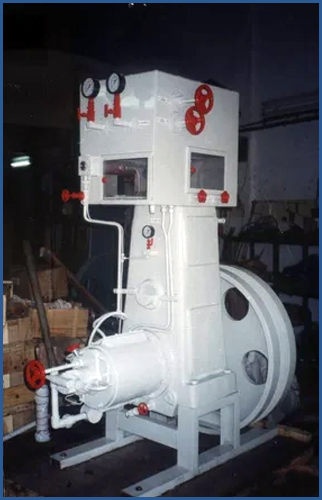








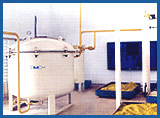
The Expansion Engine is vertical,
single acting, triple expansion engine, reciprocating type. This produces
the cold required for the plant. High- pressure air enters through inlet
valve at the start of downward stroke of the piston. On further downward
motion, the inlet valve closes and entrapped Air expands. During upward
stroke, outlet valve remains open and inlet valve remains closed.
Therefore, in downward stroke Air enters the cylinder and expands. In the
upward stroke the expanded air is pushed outside. The electric Motor is used
to start the machine. Thereafter the Engine is moved by the Air pressure
itself and during which time, the Engine motor retains the speed by acting
as a brake. Since work is done by Air in rotating the flywheel, it loses its
heat content (enthalpy), thus the Air gets cooled. This cooling is more than
that of an expansion in an Expansion Valve.
An elementary factor for the function of an Expansion Engine is to use dry
and carbon Dioxide free Air, as otherwise, ice and dry ice will form on
valve seats, causing mal-function. The approx. temperature drop across
Expansion Engine is 50 to 70°C, depending on inlet air pressure,
temperature and inlet cam position.
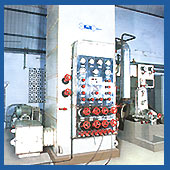
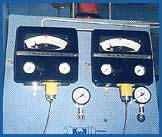
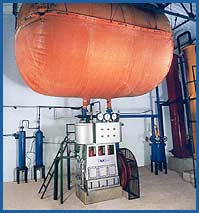
The Expansion Engine manufacturer consists of three major units.